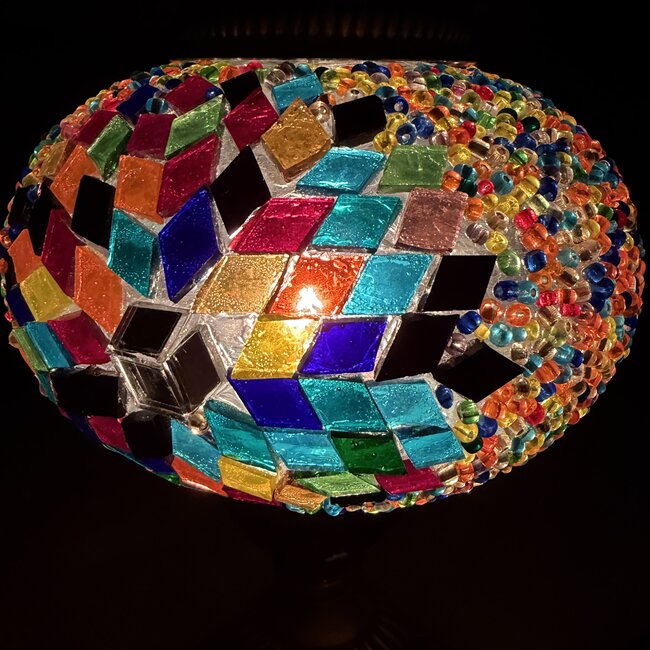
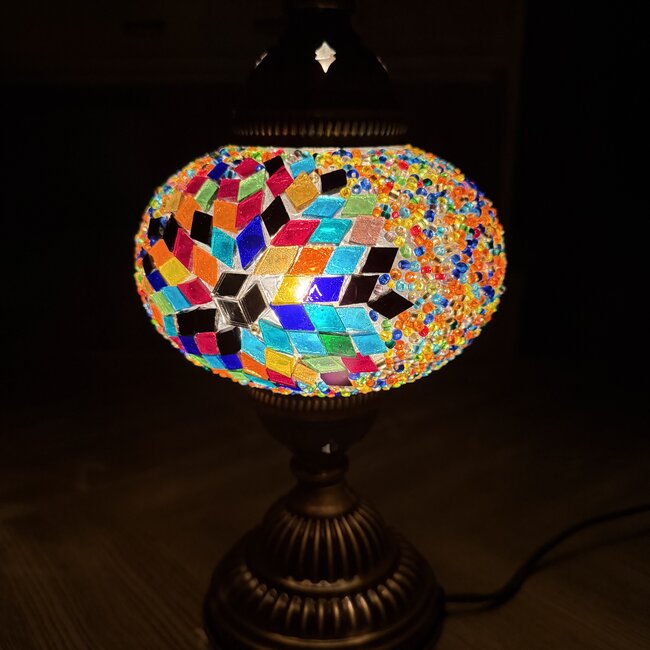
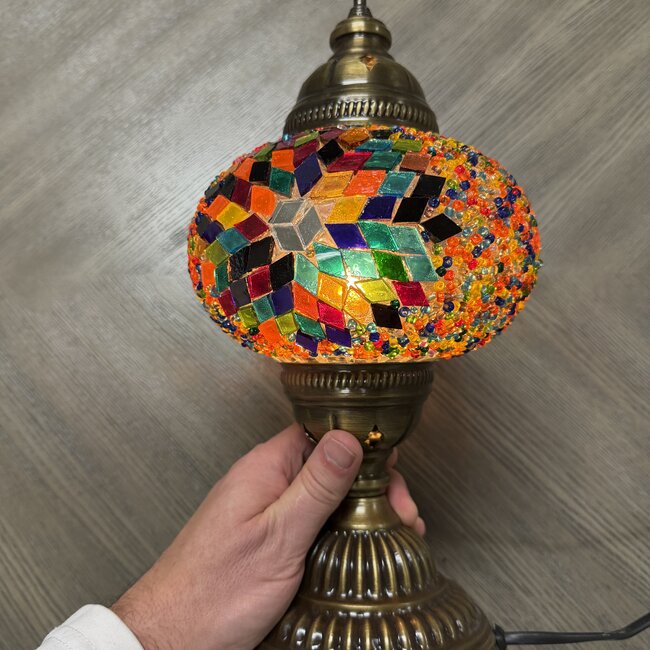
A “Turkish lamp” generally refers to a handcrafted lamp made in Turkey — often using mosaic glasswork + metal(brass, bronze, etc.).
The distinctive “Turkish mosaic lamp” style uses hand-cut colored glass pieces arranged into intricate patterns (geometric, floral, star motifs, etc.), set in plaster or another adhesive around a glass globe or shade.
Each lamp is handmade — meaning each is slightly different from the next. No two are exactly alike.
The tradition has ancient roots, linked to the mosaic arts of earlier civilizations (Byzantine, Persian) long before “modern” Turkish lamps existed.
Their familiar form and use evolved under empires such as the Ottoman Empire, where glass-blowing, metalwork, and mosaic arts combined to create ornate lighting objects for palaces, mosques, and homes.
Over time, the aesthetic moved from purely functional lighting to decorative art — pieces meant to convey beauty, cultural identity, and craftsmanship.
It begins with selecting high-quality colored glass and cutting it into small “tesserae” (tiles). These are arranged by hand into a pattern on a curved shade (glass or metal) — often over a glass globe.
The gaps between glass pieces are filled (with plaster or similar material) to secure them and diffuse light evenly.
The base/frame is typically made of hand-worked metal — brass, bronze, or copper — sometimes with engraved or decorative details.
Because of the handcrafted nature, these lamps often have subtle irregularities — which are part of their charm and authenticity.
Rich, warm, colorful light: When lit, the mosaic glass casts a soft, multicolored glow that creates a warm and inviting atmosphere. This makes them great for living rooms, bedrooms, cozy corners, or even restaurants and cafés.
Decorative statement pieces: Because of their intricate mosaics and often ornate metalwork, Turkish lamps are as much art as function — they often double as décor items, adding an exotic, bohemian, or oriental flair to interiors.
Cultural & symbolic resonance: The patterns and colors sometimes draw from traditional motifs — geometric, floral, star-like — echoing centuries of artistry. Light itself also carries symbolic weight in many Middle Eastern contexts (hospitality, warmth, spiritual ambience).
Unique craftsmanship & authenticity: Because they’re handmade, each lamp is a unique creation — which appeals to people who appreciate craftsmanship over mass-produced goods.